
This is a subtitle for your new post
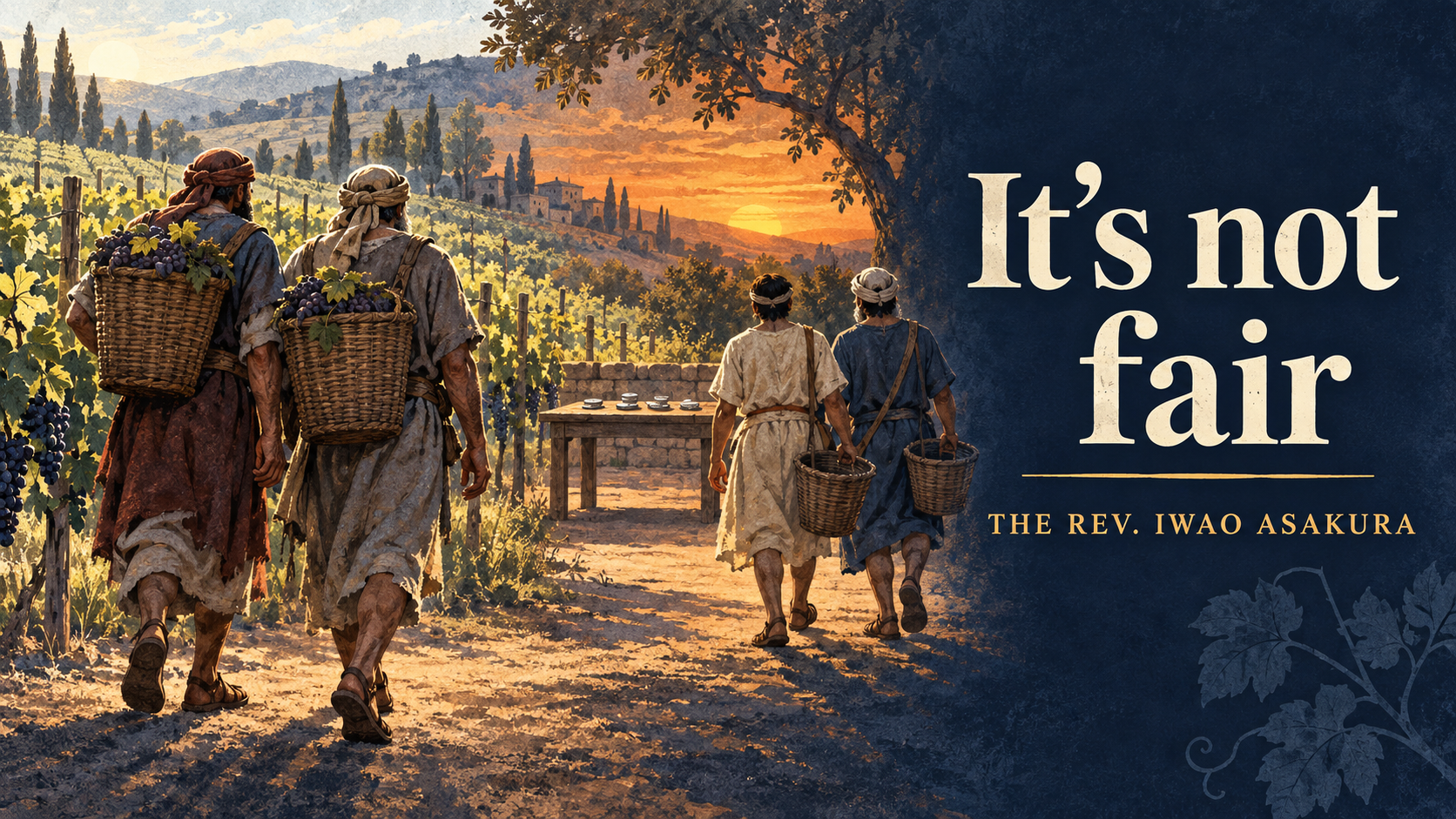
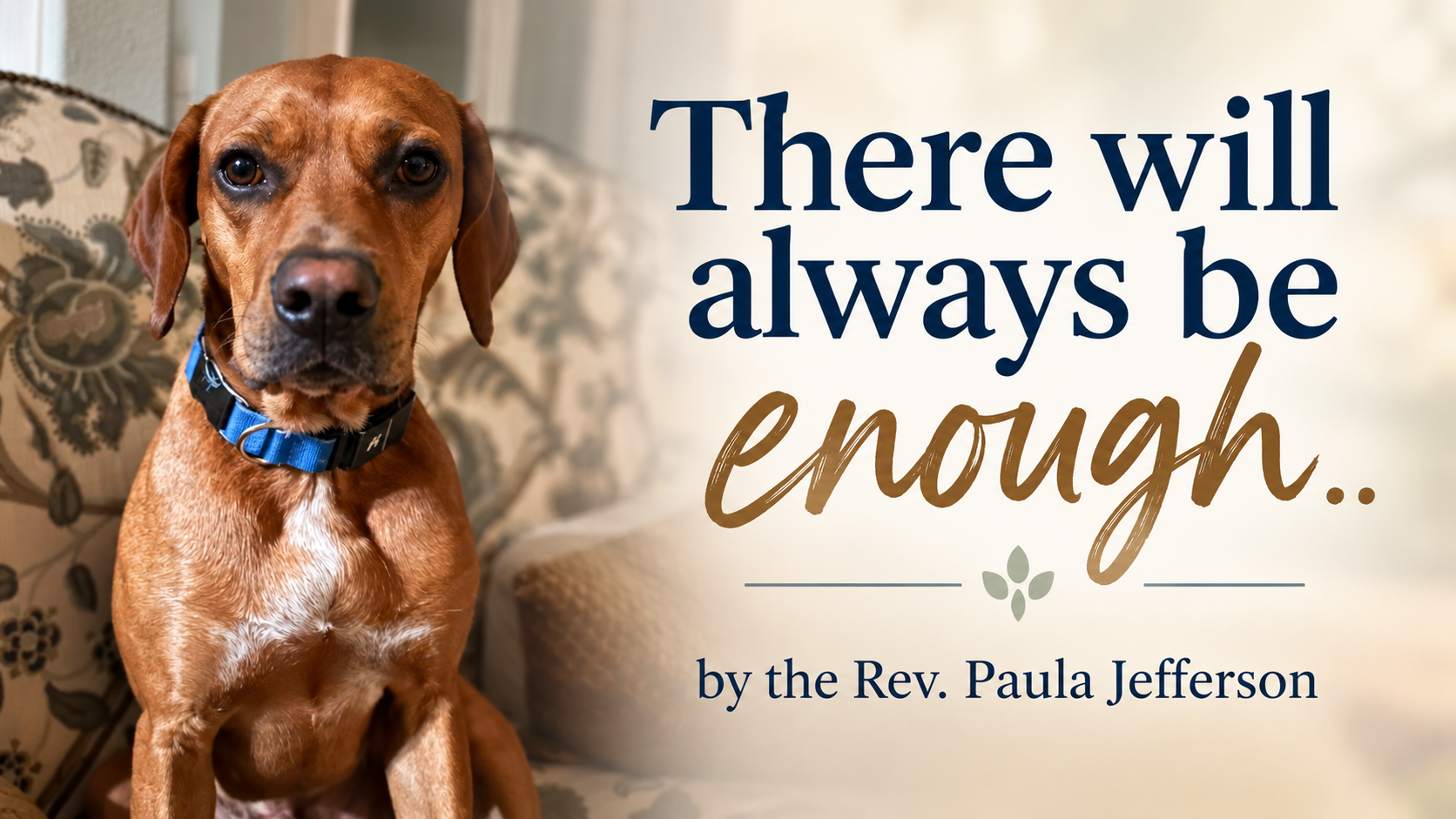
When I adopted my dog, Scrappy, he was 9 months old. He was found on the streets of Euless—and because he was a puppy, the animal control folks invested in him. He was neutered and moved to an animal shelter where I found him. When he came to us, it was clear that he had never lived in a home. The first evening, I fed Dursey and Scrappy together. That was a mistake. Scrappy immediately went after Dursey to get Dursey’s food. There was growling, barking, and bared teeth between the two dogs, so I reached for Scrappy’s bowl. That was also a mistake. It was my first encounter with food guarding. Scrappy was used to roaming the streets, searching for food, protecting whatever he found from other scavengers. He was fighting to protect the food I had given him—and then he started trying to take Dursey’s, too. Scarcity and survival had shaped Scrappy’s understanding of the world. ….pause…. Matthew tells us the parable of the unforgiving servant. A king summons a slave to repay what he has borrowed from the king. He cannot repay. Therefore, the king orders that he, his family, and his possessions be sold so that the king’s bank account will be restored. There is no compassion here. No mercy. This is simply business as usual: Pay up or be sold. Then the parable took an interesting turn. The debtor falls on his knees and begs the king for patience so that he could repay the debt over time. He’s not asking to be released from the debt. He’s asking for more time. But the king does something the debtor isn’t expecting. Rather than giving more time, the king releases him—and forgives the debt. All of it. In that moment, his life –and that of his family—changes dramatically. He has lived his whole life in an economy of debt. Someone is owed. Someone pays. And, now, out of the blue, the king says: You don’t owe me anymore. The man walks out. Almost immediately, he meets a fellow servant who owes him money. He grabs the man and demands payment. The servant says to him the very words he had just spoken to the king: “Have patience with me, and I will pay you.” But he refuses. He has the man thrown into prison. The unforgiving servant received a gift—but it was such a foreign experience, he did not know how to live inside it. …pause… What is a gift? In tax theory (my turf), a gift is something of value given without strings attached …without an expectation that something will be returned to the giver, and without the giver controlling what the recipient does with it. Was the king’s debt forgiveness really a gift? The king never tells the servant, “I am forgiving this debt on the condition that you forgive the debts of others.” There is no stated condition in the story. And, yet, when the king learns what the servant has done, he takes the forgiveness back. He restores the debt and sends the servant to prison. What kind of gift is that? The king introduces something that looks like a gift economy—and then, when the recipient fails to behave according to the rules of that economy, the king returns to an economy of debt. …pause… After that first disastrous feeding, I learned to feed Scrappy in a separate room…my bedroom. And he learned the ritual that made his meal appear: Scrappy, Come. Scrappy, Sit. Scrappy, Wait. The bowl goes to floor. I take his head into my hands and say, “I love you Scrappy. There will always be enough.” And then he eats. I know he does not understand what those words mean. But he does understand the ritual. He knows what happens next…he has learned that he doesn’t have to fight for his food. He can wait. There will be enough. …pause… We become what our relationships teach us about the world. Scrappy learned that food was scarce. He learned to grab…to protect. It took time for him to learn something different. He had to experience it – again and again. I wonder if that is part of what Jesus is getting at in this parable. The servant has been forgiven an impossible debt. He has been given a completely new reality. But he walks right back into the old one: You owe me. Pay up. The parable isn’t simply saying, “Forgive, because that’s the rule.” It is showing us the consequences of a community in which people cannot trust that there will be enough mercy to go around. …pause… We know what that feels like. When we think there isn’t enough forgiveness, grace, recognition, love, we start keeping score. I forgave you last time. I’ve given enough. I’ve done my part. Just like that…forgiveness becomes a transaction…a ledger sheet. …pause… Jesus is inviting us to something very different: “I release this debt.” Period. Because, there is enough….enough mercy, enough grace, enough love. This is the kind of community St. Christopher’s is becoming--a place where forgiveness and mercy are given freely—not because we expect something in return, but because we have received them freely, ourselves. Every time we choose mercy instead of keeping score, we practice a different way of living. …pause… This morning, I opened the back door and called, “Scrappy, Come. Breakfast.” He ran into the house…running so fast he couldn’t make the 90-degree turn into my bedroom hallway. He had to run through the living room to slow down, then to my bedroom. He ran in frenzied circles until I said, “Scrappy, Sit. Scrappy, Wait.” I put down the bowl, took his head in my hands and said, “I love you, Scrappy. There will always be enough. Always.” Then I came here….Jesus called to us, “Y’all Come. Worship.” And we gathered, with joy and hope and all the rest that is within us. “Come. Sit. Wait. I love you. There will always be enough. Always.”

The first time I met Margie Major, she looked me up and down. Goodness knows how many Episcopal priests she had welcomed into her 101-year life. I suspect I was the first woman to be her priest. We talked, found common ground in our dogs and God. And then she asked a question I would hear on every visit: “Paula, where are my people?” Margie worshiped faithfully with St. Christopher’s through our livestream. That opportunity was possible because her great-niece, Lauryn, made it happen. During COVID, Lauryn volunteered her time and expertise to design the livestream system that still serves our congregation today. And that was also how Margie noticed who had been gathered for worship…and who was missing. Margie knew her flock. Shepherds aren’t very common today. But the crowd gathered around Jesus was very familiar with sheep and shepherds. Jesus reached into ordinary life and said, “If you want to know what God is like, look at a shepherd.” And then he told the story of the good shepherd. “I know my own, and my own know me…”. Here’s the Gospel sentence that drew my attention all week: “And I lay down my life for the sheep.” Jesus is foreshadowing the cross. But he’s also speaking of something more than one Friday afternoon. The cross reveals the shape of the life he is already living. What does it mean to “lay down one’s life?” I don’t think Jesus means one heroic moment. Shepherds don’t lay down their lives only when a wolf appears. They lay down their lives every day—their lives become ordered around the well-being of the flock. That’s the link I’ve been seeing all week between Margie’s life and the good shepherd. She didn’t wake up one morning prepared to shepherd students through desegregation, or to help found St. Simon of Cyrene, or to accompany generations of young people into adulthood. That kind of life isn’t improvised. It is formed. Over years of prayer, worship, Scripture, and Holy Communion, Christ was quietly shaping Margie into the kind of person who could give her life away without counting the cost. That kind of strength and humility reveal a life that is Christ-centered. She didn’t have to tell us. We saw it. Margie set the bar high….for herself…and for everyone she loved. She didn’t set the bar out of reach—but just past the place comfort….the place where growth begins. When Margie entered the room, we stood a little straighter, dug a little deeper. For her 100 th birthday celebration, Etta Attkinson and Edwardean Harris helped write a proclamation honoring Margie’s life through their eyes as her former students and members of St. Simon-of-Cyrene. We spent an afternoon turning their memories into proclamations. A few of my favorites…. “Whereas, Margie was an educator at the historical I.M. Terrell High School and an administrator at Paschal High School, and who was known to walk softly and carry a giant stick…. and, Whereas, Margie earned her students’ trust by demonstrating that she would honor their confidentiality; and, Whereas, Margie is respected among friends and colleagues for her wisdom, generosity, sophistication, and love of family….and on and on. pause Shortly after her birthday celebration, I visited Margie at home. She was feeling strong that day and wanted to meet in the formal living room. I had never been invited to that space. Margie had an agenda. We talked about peace…the inside kind, a life well-lived, the importance of faith in this life. We prayed…anointed. And then, of course, she put that question to me: where are my people? I had learned by then that she wasn’t taking attendance. She was asking the shepherd’s question: ‘Are my people still being gathered by the Good Shepherd?’. pause Last week, I wrote to Bishop Andy Doyle to let him know that a founding member of St. Simon of Cyrene had died and to share with him the words read into the Congressional Record of the United States upon Margie’s 100 th birthday. In his reflection, Bp Doyle recalled Mary of Bethany… In the house at Bethany, something unexpected happened, a woman broke open a jar of ointment. No one had asked her for it. No one had earned it. She poured it out over feet that would soon carry him toward the cross, and John tells us the whole house filled with the fragrance. The love came first. The understanding came later, and for some it never came at all. There is something here about Margie, he said. She loved us before we knew how to receive it. This is why she founded a church! The love was given long before any of us thought to give it back, and before I met her. We can count what she built. Count what she did, who she served, and how she provided. Count and give thanks to God. Read that list aloud and it will still fall short, because the list records what her hands did while saying almost nothing about why the room changed when she was in it. I’ve wondered this week what it was about Margie that changed a room when she entered it. It wasn’t power. It wasn’t position. I think it’s that she carried the quiet authority of a life deeply rooted in Christ. Margie had the rare gift of helping other people become the very people God created them to be. Around her, we wanted to become a little kinder, a little wiser, a little more faithful. We stood a little straighter—not because she demanded it, but because she called forth the best in us. Bp Doyle said, The Church has a word for something or someone who carries a grace beyond our seeing. We call it a sign. Margie was a sign of so many of God’s promises. What we loved in her was never hers. It was poured into her and then poured out on us. She was a steward of godly things. Paul told the Corinthians they had become the aroma of Christ. He meant it about people who had been near enough to Jesus that the scent stayed on their clothes. Here is Bethany. The jar is broken now. The fragrance is still in the house. It is in you, in the way you welcome the stranger she would have welcomed, in the work she started that your hands will continue. Blessings to you all, Bishop Andy The Rt Rev C. Andrew Doyle Episcopal Diocese of Texas Bishop Andy is right…the fragrance remains. It is here … in this very room. It lingers in the lives she shaped, in the students she encouraged, in the church she helped to build, in the family she cherished, in the woman priest she taught to be a shepherd, and in every person who learned from Margie what it means to follow the Good Shepherd. But that fragrance is not our hope. The fragrance is a gift…and a sign. But it is not the Gospel. The Gospel is this: Christ is risen. The Good Shepherd who called Margie by name in Baptism has now called her through death into eternal life. That is our hope. Margie asked, “Paula, where are my people?” Margie, your people are here. We are here because you loved us. We are here because you spent 101 years pointing us toward the Good Shepherd. And one day, by the grace of God, we will be with you. That’s the resurrection. With thanksgiving for the life of Margie Major…Amen.