
You may have heard some subtle murmurings about a celebration happening today. 


Over the past couple of weeks, whenever I open Facebook, there’s a new post about the one-year anniversary of Rev. Paula at St. Christopher’s. But, really, what we are celebrating today is the one-year anniversary of our partnership in ministry.  And it is good. 


The first sermon I preached here (a year ago) recalled a pilgrimage trail I hiked in 2014. The Via Francigena is an ancient trail that led early Christian pilgrims from Canterbury to Rome. I jumped onto the trail north of Siena, Italy.


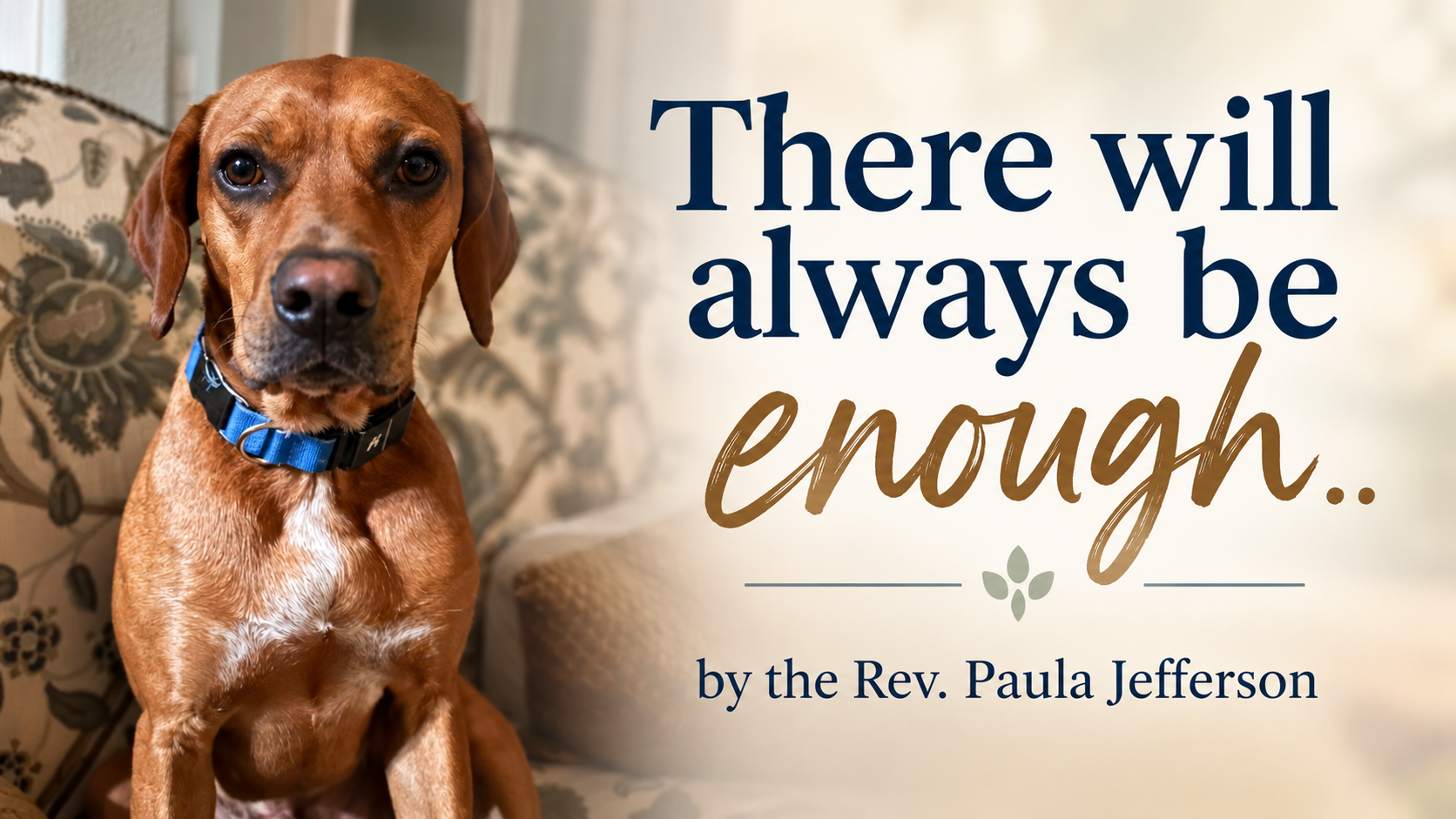
On the first day of our hike, the trekking company met us and gave us maps, a St. Christopher medallion, and a warning.  They presented a picture of the Italian Sheep Dog and explained that these dogs are very dangerous. They protect the family’s sheep from all predators including humans. If we saw one, we were told: “Do not run. The dogs will attack you. But, hey, not to worry, we have never had a sighting of these dogs on the trail.”


Of course, on day one, we would encounter two Italian Sheep Dogs who were ready to take us out. 

The shepherd who owned the dogs was running a tractor and did not hear us shouting for help. But, eventually, he saw us. To distract his dogs, he threw rocks at them. And then he pointed down the trail and shouted in French: “Allez! Allez!” Go! Go!


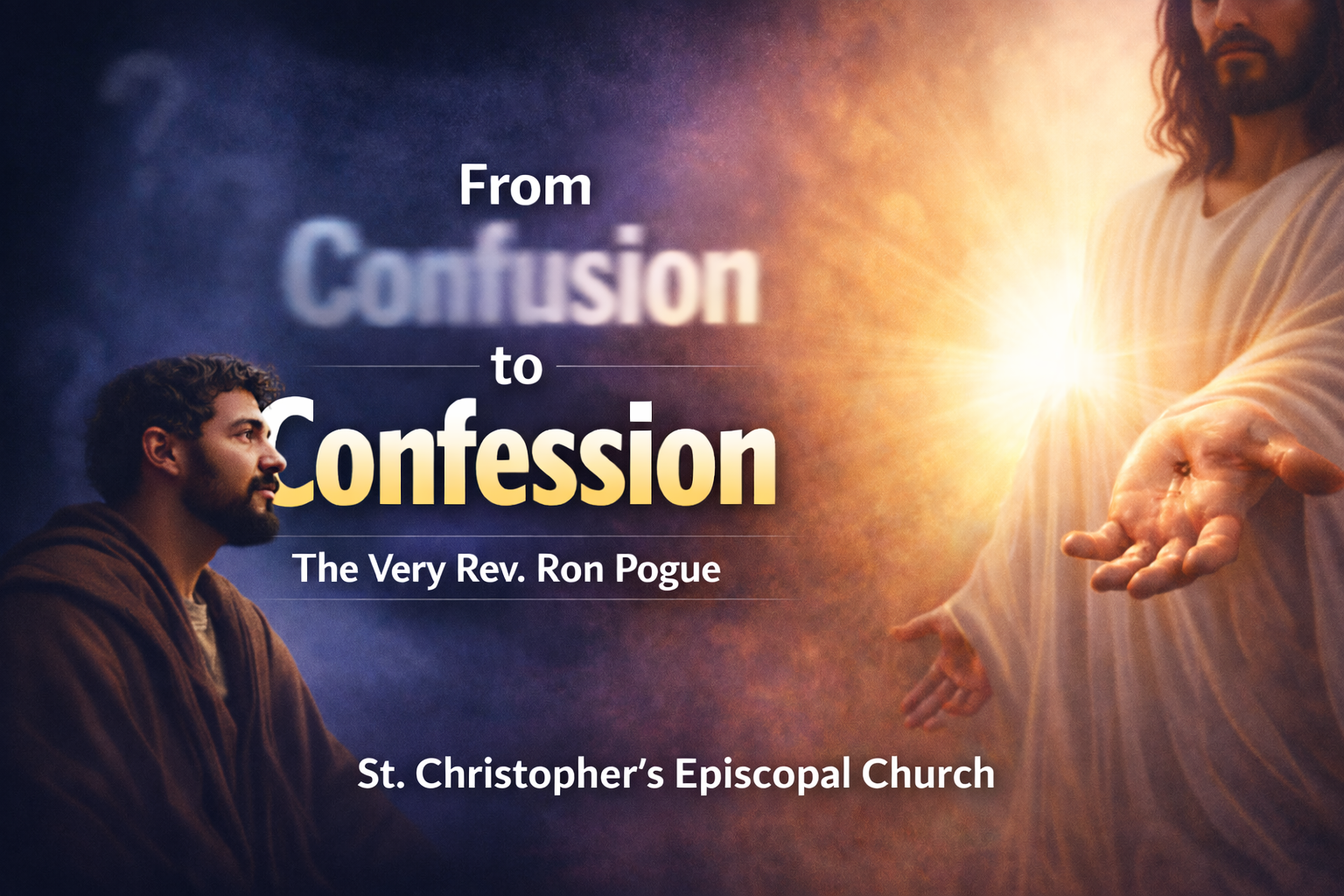
On the Sunday, we are celebrating our one-year anniversary of mutual ministry, Jesus gives a one-word command to Peter, “Come!” 


 A few years ago, I visited the Holy Land. We stopped at a museum near the Sea of Galilea to look at artifacts from ancient times. One of the most memorable items was a sailboat.


Archaeologists estimate the boat sank around the time of Jesus.  It was well-preserved by the water and a good example of the boat in today’s Gospel.


The boat was not a yacht. I’m not exaggerating when I say the boat would fit in my living room.  It looked like a big rowboat with a mast for sails.

Jesus sent the disciples in a boat like this to cross the Sea of Galilea. He intended to disperse the crowds and then join the disciples before they had gone far. But Jesus delayed, going instead to a mountaintop to pray. 


When he finished praying, it was early in the morning. The disciples had been in the sailboat all night. Matthew says the boat was battered by waves, and still far from land because the wind was against them all night. It must have been a long, sleepless night for them. 

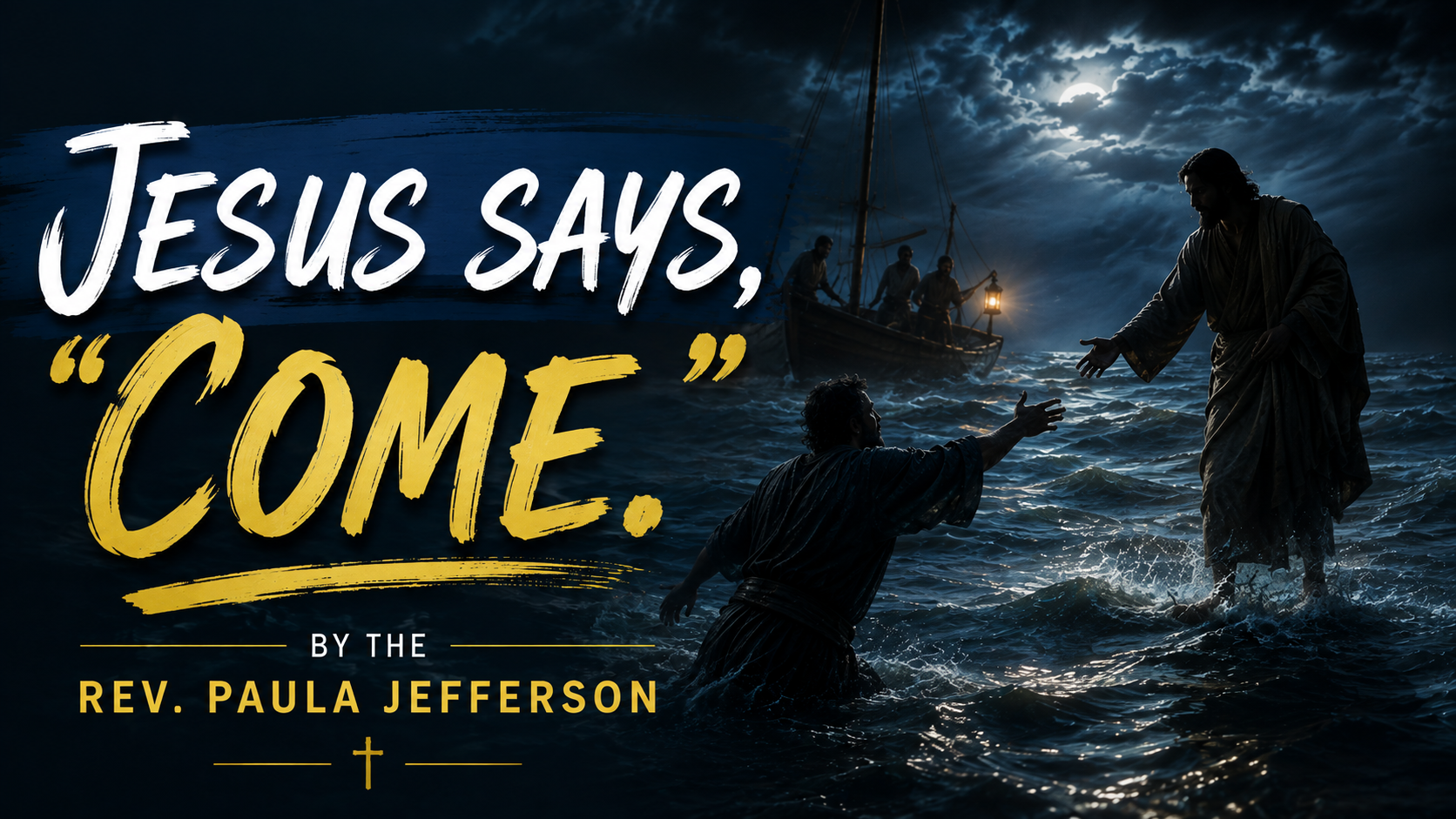
Early in the morning, the disciples see Jesus walking toward them on the water. Their first reaction is fear. “It is a ghost.”


Jesus says, “It’s ok fellas. It’s me. Do not be afraid.”


Peter says, “Lord, if it is you, command me to come to you on the water.”


Jesus says, “Come.”


When the Italian Sheep Dogs were running toward my friend, Phyllis and me, I became acutely aware of how unprepared we were for this encounter. I had a backpack with plenty of water and a rain poncho. Phyllis was sporting the backpack her grandchildren had given her: a purple Tinkerbell backpack complete with wings. We had nothing to defend ourselves.


We shouted commands in French, Spanish, and English but the dogs continued to advance. When the Shepherd finally spotted us, the dogs were 5 feet from us. We were frightened.


The Shepherd separated the dogs from us and then he pointed down the trail and shouted, “Allez! Allez!” We hesitated for a moment. Turning away from the dogs meant trusting a shepherd we did not know.


Truth be told, we had no better chance of surviving an encounter with the dogs whether we were facing them or running from them. 

By turning away, we surrendered to trust.
 

The disciples had a rough night at sea. By dawn, they’re still stuck on the water. The wind is bad enough that waves are beating the boat. Suddenly, Jesus appears walking on water toward them. It seems like the disciples would be thrilled to get out of this boating nightmare and take their chances walking with Jesus. 


But they hesitated. They do not yet see Jesus through the lens of faith.


Peter does. He climbs out of the boat, and he walks on water. And then a very human thing happens. Peter becomes acutely aware of the danger: the wind, the water. Logic shouts, “Peter you can’t do this.”  And he begins to sink. 


I love the response as is he sinking. He doesn’t try to swim back to the boat. He’s not going back to where he was before this epiphany, this awakening. Instead, his first inclination is to cry out, “Lord, save me!”


Peter knows who Jesus is.  He didn’t figure it out by sitting in the boat.  He figured out by walking in faith


Peter has been changed by the experience.


A remarkable epiphany happened in the life of St. Christopher’s a couple of years ago. When the building was taken away, you recognized that the church is not a structure. We don’t “go” to church. We “are” the church: a community of seekers walking with -- and toward -- Christ. Like Peter, you got out of the boat and began walking toward Grace, toward healing and toward a brand-new horizon that isn’t tethered to a boat dock.


Last August, you welcomed me to walk with you on this pilgrimage. My life has been enriched every day of this past year. You are part of me. And I am part of you. 


We come to here to worship together, to give thanks for all that God is doing in our lives and our parish. We pray together. We exchange God’s peace with one another, and we come to God’s Table to share in one bread, one cup. This is Jesus’ command to Peter and to us: Come.


But that is only one part of the story. 


Jesus also sends us into the world to be agents of his love in our friendships, our families, our community. Allez! Go.


As we continue walking together, may we go with Peter’s Holy Boldness.


May we remember that whether we’re walking on water or sinking in it, Christ is in us. And we are in Christ. 


Amen.


By Paula Jefferson December 8, 2025
By Tanya Eiserer November 23, 2025
We all look for something to steer for us. My mom often said, “Be careful what you wish for”. She never explained what it meant…she didn’t have to. Often, when we wish for something, there are unintended consequences. I’m an early-adapter with all things technology. When self-driving cars became a thing, it was at the top of my wish list. And then one night, my car downloaded a software update that allowed me to try fully self-driving mode for thirty days. Free. They were speaking my language. Much of the time, that software worked beautifully. But one night I was driving home from the church…through the Fort Worth mix-master. At the best of times, the mix-master is a test of faith. That night, I realized…a little too late…that my car didn’t “see” vehicles merging from my right at highway speeds. A car darted in front of me at 55mph. My car panicked. It slammed on the brakes, forcing everyone behind me to do the same. Tires were squealing and I may have said a few choice words. Then a calm robotic voice came through my speaker: “What just happened?” Without thinking, I answered, “We’re all going to need clean clothes!”—a reminder that trusting the wrong kind of power can create more chaos than good. Three thousand years ago, the Israelites faced a similar challenge. They had judges—and they had Yahweh—but they were not satisfied. The nations around them had kings and queens…and Israel longed for a visible symbol of power: a government that looked strong and invincible to their neighbors. “Give us a king,” they said, “like other nations.” [1] Samuel warned them: “…in that day you will cry out because of your king, whom you have chosen for yourselves; but the Lord will not answer you in that day” [2] Be careful what you wish for. God’s warning is clear: the king you want will take more from you than he gives. And history shows it. Saul and David and their successors ruled. But, human power systems fail…they always have…we are no strangers to that in our own time. After Solomon, the kingdom split into the northern kingdom of Israel and the southern kingdom of Judah. Leaders often sought their own gain instead of tending to the people, especially the most vulnerable. By Jeremiah’s time, Judah itself teetered on collapse. Yet God speaks through the prophet, offering hope, promise, and vision of restoration. “I will gather the remnant of my flock…I will raise up shepherds over them who will shepherd them, and they shall not fear any longer. The days are surely coming, says the Lord, when I will raise up for David a righteous Branch, and he shall reign wisely and shall execute justice and righteousness in the land.” [3] Jeremiah is speaking God’s words here—a promise of a king unlike any human ruler. Not a king who exploits or coerces, but a shepherd who tends the scattered, who watches over the vulnerable, and who leads with justice and care. Luke shows us that shepherd in the most unexpected place: on a cross. Even there, Christ gathers the lost and welcomes the outsider—the very people no one expects to matter. Colossians describes the cosmic dimension of this shepherd—the One who reigns over all creation and reconciles all things through love. This shepherd’s kingdom is not defined by force—but by mercy; not by fear—but by reconciliation; not by scarcity—but by eternal gift. And here is the Advent connection: the King we await is already among us—reigning in ways that the world does not expect—and has never expected. Christ’s reign is not deferred to the end times. It is now. For those who long for a dramatic return of Jesus…scrutinizing hidden messages and timetables…be careful what you wish for. Christ’s reign is not waiting on a cosmic clock. It is already present, entrusted to us --the mystical Body of Christ-- in this world, in this moment. And that realization is sobering. Because if Christ reigns through mercy, reconciliation, and self-giving love, then we—his Body—are called to reign in that way too. In our families, we are called to speak truth in love and care for one another. In our workplaces and communities, we are called to act justly, to lift up the vulnerable, to speak for those without voice, and to forgive the one who has wronged us. In the simple moments of everyday life—offering a kind word, feeding the hungry, welcoming the outsider—we participate in the Shepherd’s reign. Advent invites us to practice that reign, to trust that heart, to embody God’s kingdom in the everyday moments of our lives. We all look for something to steer for us. Christ the King reminds us: the safest driver is not me…or a throne…or even a Tesla. The only true driver is God. In Advent, we learn to let go, trust God, and follow, even when the road ahead is uncertain. Thanks be to God. [1] 1 Samuel 8:5 [2] 1 Samuel 8:10-18 [3] Jeremiah 23:3-5
By Paula Jefferson November 2, 2025
It has only been a few months since we last heard this particular Gospel reading. While I was driving up and down Highway 35 last week, I thought about how we might approach the text differently…especially on All Saints Sunday. This is the day we remember all the faithful people who have gone before us…ordinary and extraordinary folks who lived lives of love, mercy, courage and hope. I began with questions: Who is a saint? Who is not a saint? The second question is much easier to answer. We can all think of people throughout history who would definitely not fit any definition of sainthood. But the other question is harder. It brought to mind a character who wears a red suit, big white beard, moves around in a sleigh pulled by reindeer. Santa Claus is an icon of generosity. But is that the fullness of a saintly life? We often admire people for what shines outwardly: strength, beauty, power, fame, athleticism, traveling the globe on Christmas Eve delivering millions of gifts…because that stuff is easy to see and easy to glorify. But Luke is reminding us that true blessedness looks very different…it is found in the poor, the hungry, those who mourn. Blessed are those who are rejected or marginalized because they embody love…feeding the hungry, forgiving enemies, speaking truth to power. Paraphrasing Jesus: Blessed are you who are living in such a way that your life looks like mine. So what are the signs of a Christ-shaped--or saintly--life? To answer that, I drew from Jesus’s sermon on the Plain and a few well-known saints. 1. Humility —Jesus said, “Blessed are you who are poor, for yours is the kingdom of God.” Richard Foster devoted his life to guiding Christians into deeper spiritual formation. He described humility as the freedom to see ourselves truthfully, to rely fully on God, and to serve others without seeking recognition. [1] Humility reflects the blessedness of those who recognize their dependence on God. 2. Courage —Jesus said, “But I say to you who hear: Love your enemies, do good to those who hate you, bless those who curse you, pray for those who abuse you.” Dietrich Bonhoeffer devoted his life to following Christ faithfully in a world that was in moral and political crisis. He said that moral courage is nurtured in the context of faithful Christian community. Courage is faithfully doing what is right, trusting God’s guidance, even when it costs us. [2] His moral courage exemplifies living faithfully in the face of evil. 3. Joy —Jesus said, “Blessed are you who hunger now, for you will be satisfied…Blessed are you who weep now, for you will laugh.” Henri Nouwen devoted his life to helping others encounter God’s love through prayer, presence, and compassionate service…especially alongside the most vulnerable among us. He said that joy does not simply happen to us. We have to choose joy and keep choosing it every day. It is a choice based in the knowledge that we belong to God and have found in God our refuge and our safety and that nothing, not even death, can take God away from us. [3] 4. Love and mercy in action — Jesus said, “Do to others as you would have them do to you.” Mother Teresa devoted her life to making Christ’s love tangible through service to the poorest, sickest, and most marginalized people in the world. For her, love was not an abstract idea—it was what you do with your hands and heart every day. She incarnated mercy in action, making tangible the call to bless and serve others. 5. Faithfulness in difficulty —Jesus said, “Blessed are you when people hate you, and when they exclude you, revile you, and defame you on account of the Son of Man.” Martin Luther King, Jr. devoted his life to pursuing justice and equality through nonviolence and love rooted in faith and moral conviction. He said, “The ultimate measure of a [person] is not where they stand in moments of comfort and convenience, but where they stand at times of challenge and controversy.” [4] His nonviolent witness and moral perseverance reflect Jesus’ promise of blessing for those who are persecuted and remain steadfast in their faith. There’s something of a paradox here that drew my attention. Each of these Christ-shaped lives emerged in response to real suffering, injustice or need. If Christianity had not moved through a period of superficial evangelism in the 20 th Century, we would not know Richard Foster. Without Adolf Hitler and the evil that surrounded him, we would not know Dietrich Bonhoeffer’s name. He would be a little-known academician teaching systematic theology. Without societies that toss aside people with disabilities, Henri Nouwen would have been a Roman Catholic priest none of us knew. Without human class systems that devalue whole groups of people, Mother Teresa would not be a household name. Without systemic racism, Martin Luther King, Jr. would have been a Baptist preacher in an Atlanta Church. We would not know his name. Each of these people responded to the wounds and injustices they saw in their own time in their own backyard. They took up the cross of love and carried it just a little farther. And I wonder if that quality is the benchmark of sainthood? As I look around this congregation, I see 100 saints: people who walk into classrooms every day, prepared to teach growing minds; people who walk with friends going through difficulties like loss of memory; people who feed the hungry: with meals on wheels, Union Gospel Mission, food pantries in Fort worth, and in leper colonies far away; people who make bed rolls for the homeless; Sunday School teachers who faithfully prepare to help children, youth, and adults grow in faith. People who extend hospitality to us and to St. Matthew’s and to families who gather here to celebrate the lives of their saints. Friends, we live in a very challenging era of American life. Everywhere we look, we see signs of division, misunderstanding, and an inability to work together for the common good. It is, I think, a reflection of a deep dysfunction in our culture….an incapacity to listen well, to negotiate in good faith, and to compromise for the sake of the whole. In times like this, the calling of the Church is extraordinary. We are called to embody the values of God’s reign: faithfulness, humility, courage, joy, and love---showing the world what it means to live differently, even when society struggles to do so. We, too, must take up the cross of love in our own lives, carrying it just a little farther each day. And as we do, we join the great communion of saints who have walked before us, who have borne witness to God’s love in times of trial, and who now cheer us on as we continue the journey. [1] Richard J Foster; Celebration of Discipline: The Path to Spiritual Growth [2] Dietrich Bonhoeffer; Life Together [3] Henri Nouwen; Spirituality & Practice [4] Martin Luther King, Jr; Strength to Love 1963
October 27, 2025
By Paula Jefferson October 19, 2025
By Melanie Kingsbury October 13, 2025
October 5, 2025
By Paula Jefferson September 21, 2025
September 15, 2025
Blessing of the new banner.
August 31, 2025
Aug. 32, 2025
Show More